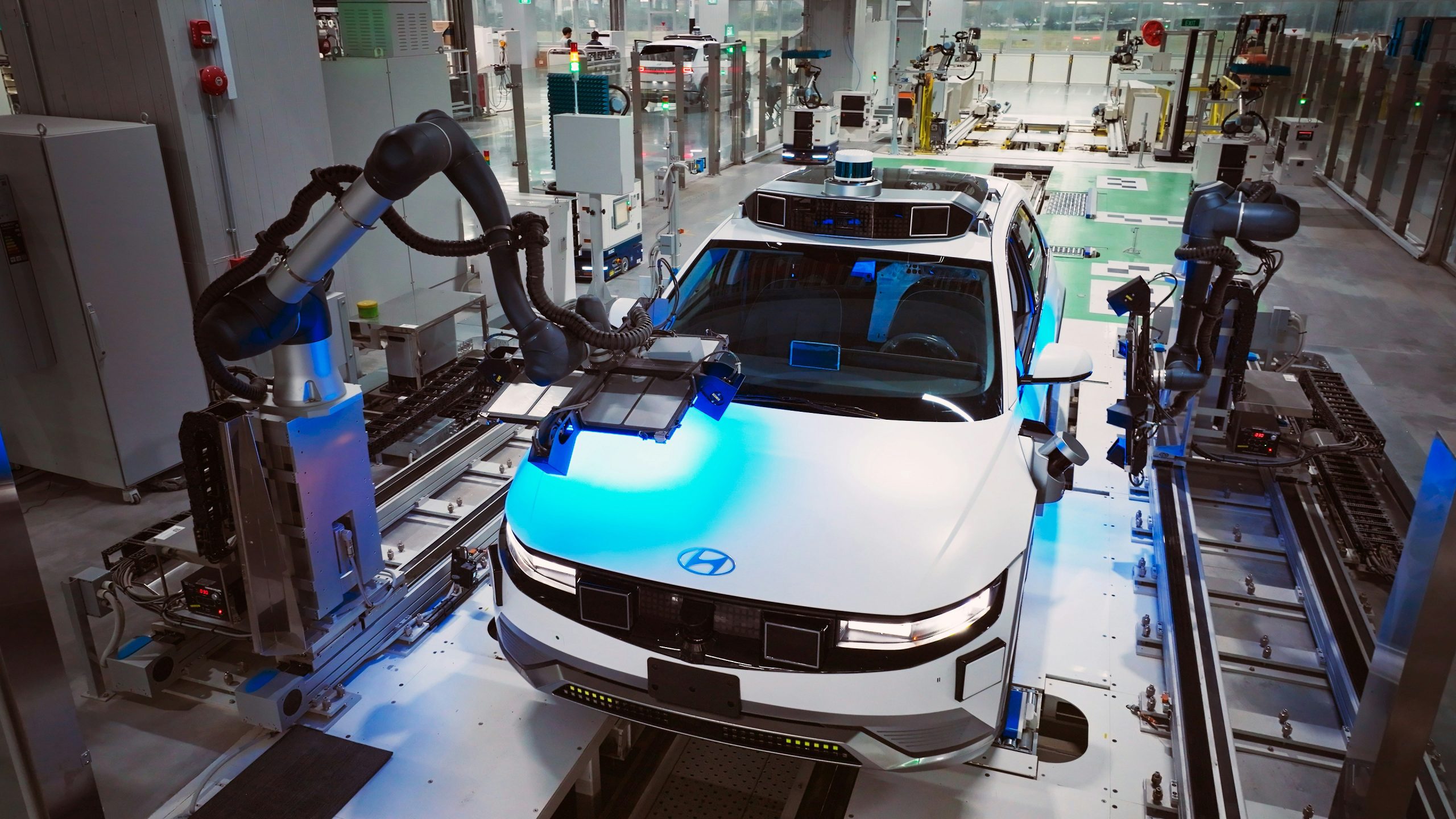
The electric-vehicle market is large and still growing rapidly: global production of electric cars reached about 17–17.3 million units in 2024. This represented roughly a quarter of new passenger-car sales that year and bringing the global EV fleet into the tens of millions. Growth has continued into 2025 with sales in the first half of 2025 were up strongly year-on-year. Major forecasters expect the EV fleet to expand several-fold through the end of the decade under current policy trajectories. These scale dynamics mean the market is already a meaningful slice of global auto demand and will be an increasingly material exposure for any automotive or energy-transition allocation.
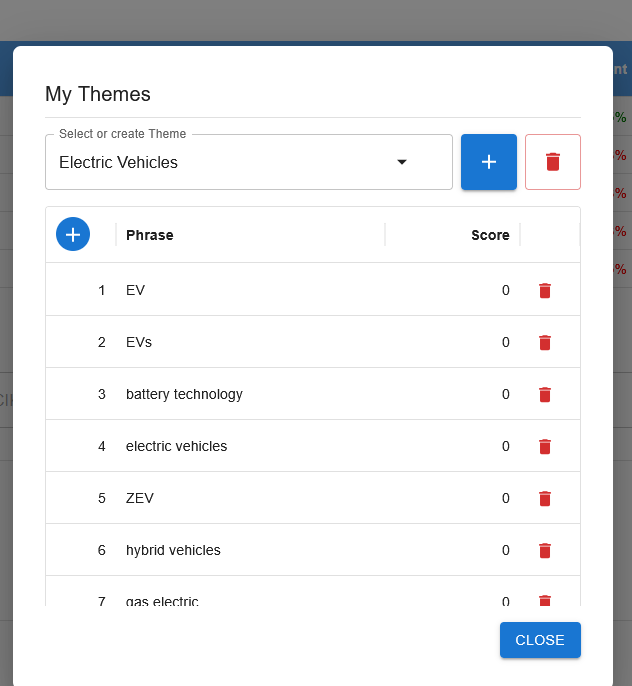
Setting up an Electric Vehicle investment theme is easy in Search10k. The steps are
- select Theme Browser from the left-hand menu
- select My Themes from your user profile in the upper-right menu
- select the blue + sign to Create a new theme and name it
- start adding keywords and phrases with the blue-circle plus sign
- close when done
- the system will take a few moments to retrieve all relevant companies and underlying financial statements that match your criteria
- browse company pages or individual filings
Competition is intense and regionally fragmented. Chinese manufacturers (led by BYD) now account for the single largest share of global EV deliveries. However, Tesla, legacy OEM groups (VW, GM, Hyundai, Stellantis) and fast-moving Chinese challengers (Geely, Changan, etc.) battle for share across different segments and geographies. Market share leadership is shifting quickly. BYD has approached roughly a ~19% share in 2025 delivery windows while Tesla’s share is noticeably smaller than in earlier years. Incumbents are responding with large EV investment programs, platform rollouts and selective price competition. For investors, this means winners will be chosen by execution on scale, cost (especially battery economics), supply-chain control, and access to key markets rather than brand alone.
How to create a Custom Theme
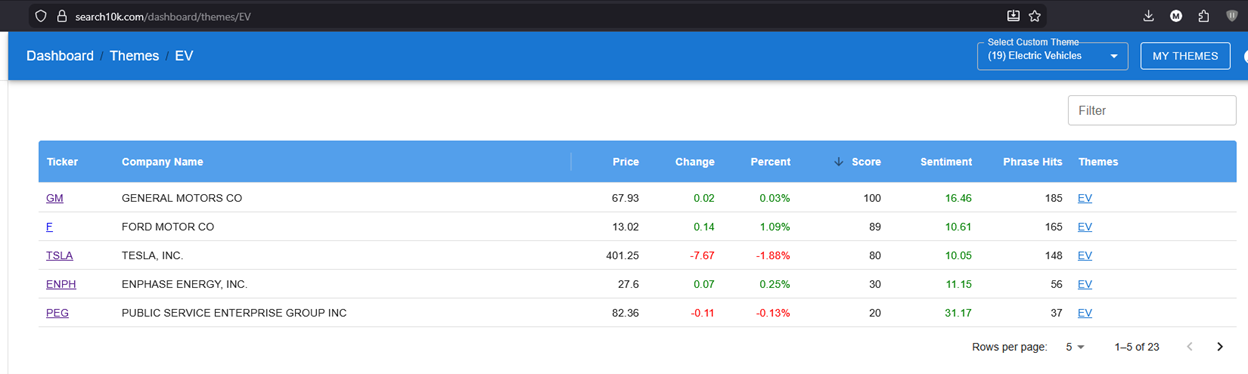
Search10k loaded 19 keywords related to electric vehicles into the investment theme, and it returned 23 company names, sorted by relevance score to the theme. Sentiment score and phrase hits are also available for sorting in different ways depending on the equity research objectives.
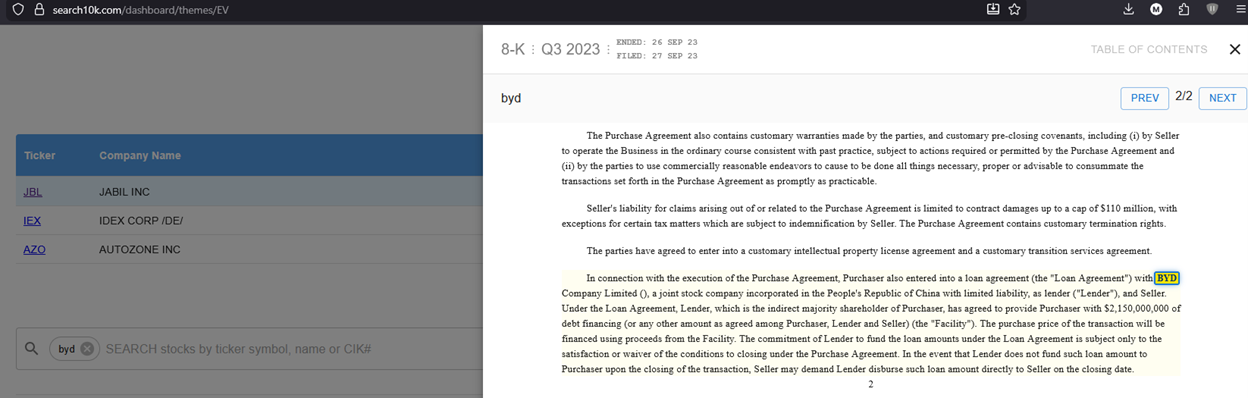
After drilling down (1) near the bottom of this list, the JABIL INC company stands out with a positive sentiment score. Selecting EV on the right (2) and clicking the blue Search button reveals all the filing documents below which contain one or more relevant keywords. Selecting the document 8-K brings up the Document Viewer which contains some important details about JABIL. JABIL is likely a supplier to BYD due to the loan agreement disclosed to facilitate accounts receivable.
Another rather surprising result that came back was Amazon being in this list of companies that contain electric vehicle keywords in their financial statements.
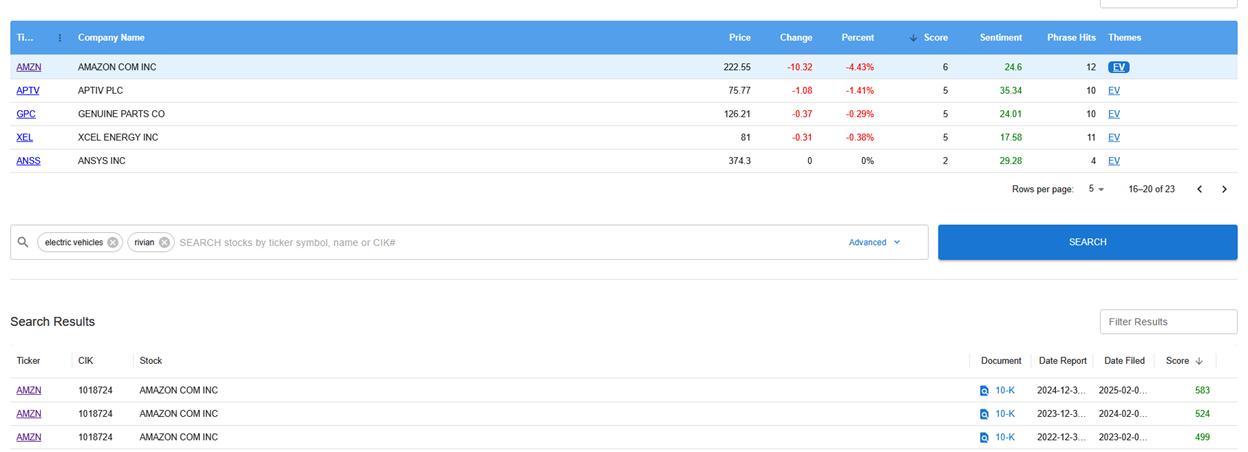
It turns out that when you drill down into its filings, you will find that Amazon took a $7B (yes Billion) position on Rivian, an electric vehicles manufacturer.
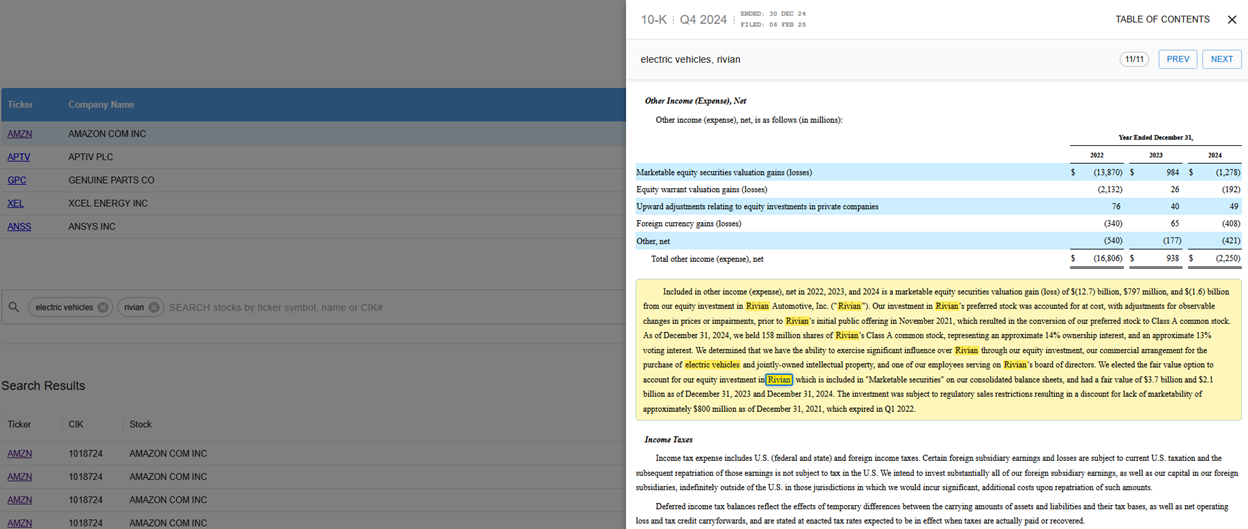
Focus on what matters within SEC filings quickly
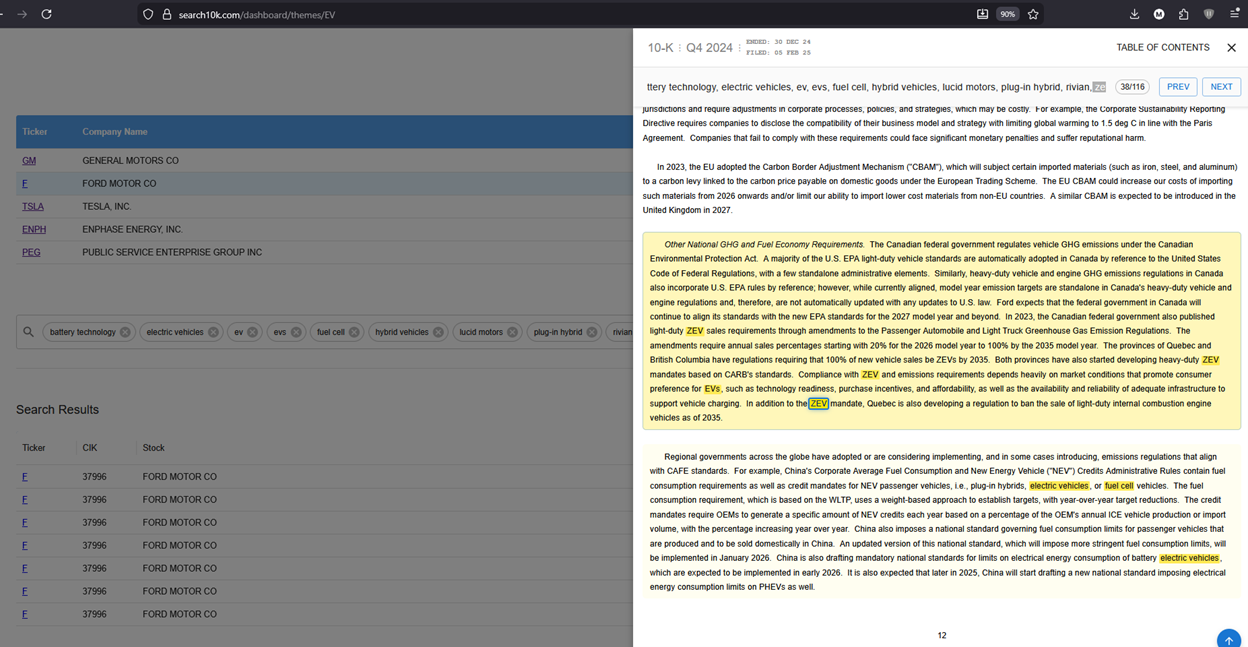
Navigating Ford Motor Company’s recent 2024 10-K report in Document Viewer also helps. This is because it skips through the 177 pages to find only the text paragraphs related to EVs. Secondly, it helps you iterate through not just one keyword, but dozens of keywords that were in the grouping.
Looking longer-term, a few structural trends will set returns: continuing battery cost declines and chemistry diversification (experts still forecast substantial falls toward the end of the decade) will compress vehicle economics and expand addressable demand; publicly accessible and home charging infrastructure build-out is a gating item in many markets; and policy (mandates, incentives and fuel-economy rules) plus fleet electrification in commercial and public sectors will sustain demand even if some retail markets slow. Investors should therefore overweight exposures to companies that secure low-cost battery supply, control software/charging ecosystems, or provide scalable fleet and infrastructure solutions — while monitoring regional policy shifts and raw-material bottlenecks that drive near-term volatility.

Comments are closed